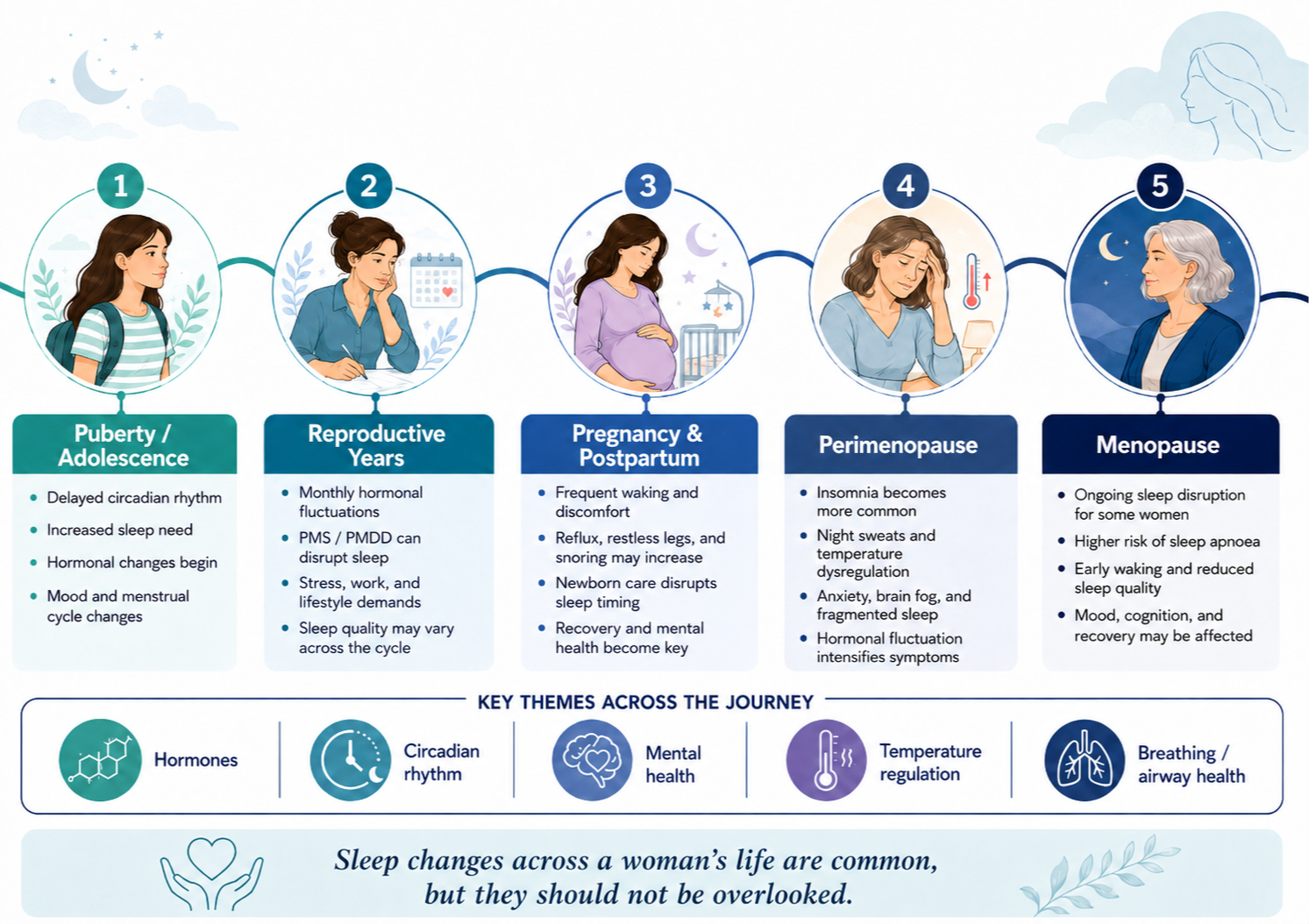
| The Menstrual Cycle and Sleep
Many women notice predictable changes in sleep quality throughout their menstrual cycle.
During the luteal phase, rising progesterone and changes in body temperature can contribute to:
• Difficulty initiating sleep
• Increased night waking
• Reduced sleep efficiency
• Increased fatigue
• Vivid dreams
• Changes in mood and emotional regulation
For some women, particularly those with premenstrual dysphoric disorder (PMDD), these changes can significantly impact quality of life.
Understanding these cyclical changes is important when assessing female patients presenting with insomnia or fatigue.
Pregnancy: Sleep Under Pressure
Sleep disturbance during pregnancy is extremely common.
Contributing factors include:
• Hormonal fluctuations
• Frequent urination
• Physical discomfort
• Gastro-oesophageal reflux
• Anxiety
• Restless legs syndrome
• Sleep-disordered breathing
Importantly, obstructive sleep apnoea becomes increasingly common during pregnancy and has been associated with:
• Gestational hypertension
• Pre-eclampsia
• Gestational diabetes
• Poor maternal outcomes
Despite this, sleep disorders during pregnancy remain significantly under-diagnosed.
Perimenopause: The Perfect Storm
For many women, perimenopause represents the most challenging period for sleep.
Declining oestrogen and progesterone levels influence multiple systems simultaneously, leading to:
• Difficulty falling asleep
• Frequent awakenings
• Night sweats
• Temperature dysregulation
• Increased anxiety
• Mood changes
• Reduced sleep quality
|